May 2014
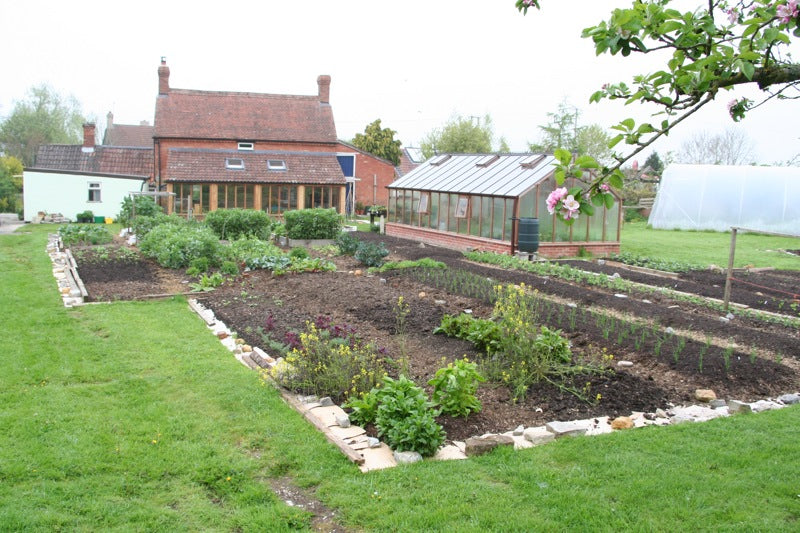
A look at Homeacres in May 2014.
Unusual Warmth
It has been another amazingly warm month, particularly by night with no frost at all and only 2011 was warmer in the last sixteen years.
However the air has often been damp and, following the wet, warm winter, this has meant an explosion of slug growth, and other pests too, including brassica butterflies and leatherjackets. A possible, slight frost this weekend will not make much difference.

Late April, plenty growing for the time of year, still many empty beds to plant

Broad beans are in full flower, with a few tiny pods.

Overwintered spring onion and garlic: I am harvesting the onions large.

Boltardy beetroot nearly ready, were planted late February on a hotbed, from sowing in January
Undercover Growing
It is changeover time, with many winter salads and vegetables finishing. After clearing the remains, just by twisting (not pulling) them out and leaving most roots in, it is a good time to spread the annual dose of compost, between two and three inches, enough to feed all summer and winter growth. It is easier to plant tomatoes, cucumber, pepper, basil etc into new compost now, than small salad and other plants in October. Also during summer when the surface is often dry, you can use feet to break any larger lumps, and thus results in an even, weed free surface for planting and growth in the winter months. Germination of new weeds is reduced at all times by watering less often, say twice a week through summer or three times if hot, a decent amount to soak in.

Tunnel on April 25th, before picking

A few hours later after picking, clearing mustards, endive and spreading compost

Greenhouse more than half cleared and the space is useful for propagation

Tale of two lettuce varieties: the longevity of Grenoble Red, still growing while Winter Gem rises to flower
Perennial kale, Taunton
Perennial vegetables are great for their continuity but have extensive root systems and I have noticed, from smaller plants on one side, that roots of perennial kale have been spreading into the no dig bed of my experiment. I removed the two closest plants, and fortunately they are easy to propagate from the many new stemmy sideshoots they keep growing, and I have put in some new plants elsewhere. This Taunton kale has been yielding wonderful amounts of tender, tasty leaves for Bruton Wholefoods shop since mid February, and many meals here all winter and spring.

Before removing two plants of perennial kale. Veg in bed on left are smaller where close to the kale bed.

After removing the two kale plants.

New planting of kale stems I rooted overwinter, in soil outdoors.

Stems to grow into new plants, greener Daubentons on left and Taunton on right has purple stems
New sowings in May
You can now sow summer beans of all kinds, but undercover only until mid month, after that outside is possible. Runner and French beans need steady warmth to prosper, whereas in cold soil they become weak and vulnerable to slug damage, so later sowings into warmer soil tend to catch up. Courgette and squash want sowing now, again undercover, while sweetcorn can be sown outdoors - although it transplants well too.
Brassicas for autumn are good to sow in May, such as cabbages for hearting in October, Brussels sprouts, kale and purple sprouting for either summer or next spring. Also you can wait until June for sowing kale and purple sprouting, then plant them after clearing early potatoes for example.

Seeds of golden beetroot mostly in a 7x11 module tray

Autumn Mammoth leeks about a fortnight from planting time, lettuce recently pricked out

Recent planting of beetroot in two beds with no compost, dug in front and undug behind
Pests
Many pests have been surviving and thriving in the warmth, it is not an easy spring for new plantings and sowings which are liked by molluscs. I have already lost many carrot seedlings and am resowing, but at leastt parsnips survive better, if not completely. Another bad pest here is leatherjackets, the larvae of cranefly, whose favourite food is roots of lettuce, spinach and beetroot in that order, in this garden at least. Damage is worst to new plantings because they have too few roots to regrow, but the larvae are present under older plants too. I have found they eat just a few brassica roots but do not trouble legumes and alliums, thank goodness. This is the first year that I have suffered such damage, normally it is a few plants and most gaps are filled by replanting, after rummaging in compost to find the culprits. I watered on some expensive nematodes three weeks ago and am still waiting to see a worthwhile difference, but some beds are fine with healthy lettuce and spinach, and Batavian lettuces are showing resistance.

So its a nice beetroot, overwintered Bulls Blood....

However underneath I found three fat leatherjackets eating its roots - but large plants can survive this, small ones cannot.

Likewise these spinach have been cropping well but two plants I removed had leatherjackets eating their roots too.
More weeds
Weeds have been growing fast in the warmth and you need to keep abreast of them by hoeing seedlings on a dry day, and when tiny if possible, which is much easier than dealing with larger weeds.
And use a trowel for perennials’ roots, as in the photos.

My handy copper trowel extricated this couch plant, ready to invade a bed with its new roots

Showing why bindweed is called 'devil's gut', this one was hampered by a cardboard mulch
Salads
Its a fast changing time and the photos show the end of winter in the salad bowl. My most recent pick had the first colourful leaves of outdoor lettuce and more pea shoots, also some broad bean tops.

Flowering leaf radish, these are extra delicious stems

Last winter harvests with endive Aery about to flower, it has been prolific since December
Update May 15th
Warming continues, the last-frost date is past and tender plants can go out at last. Still no rush though, any time until early June is good for planting squash, courgette, runner or French beans and sweetcorn outside. None of my tender plants are quite ready yet, although I just set out some pretty plants of oca and module-seedlings are loving the warmth.

This was September 2013

and this is May 14th 2014

All planted on March 10th then 3 weeks of fleece: peas for shoots, Greyhound cabbage, Boltardy beetroot and shallots from seed

and this is Steph's no dig allotment in Bruton, garlic in particular is looking strong
Polytunnel
Undercover it is changeover time from winter salads to summer vegetables. Now finished are oriental leaves, land cress and winter purslane but lettuce and spinach are still going well.
New planting by the canes is climbing French beans.

Half winter salads, half tomatoes, beans, Stevia, aubergine

Grenoble Red lettuce were sown early September and have been picked for six months since November, probably two more harvests before flowering

This spinach Medania was also sown September and has been producing since late November

Aubergines Black Pearl, three grafted and two ungrafted, to compare
Seed saving in the polytunnel
Also in the polytunnel mostly I am letting a few plants flower for collecting seed. Breaking the rules a bit too, for example brassicas are “outbreeders” and are best maintained with a broad genetic pool, by allowing cross pollination between ten or more plants. Problem is, this needs a lot of precious space. Two years ago I saved mustard seed from one plant of each variety and it has grown beautifully, however this may not be possible every time, see “Back Garden Seed Saving” by Sue Stickland, Eco-logic books. Sue was head gardener at Garden Organic when they were more serious about growing vegetables and worked with the Heritage Seed Library too.

Coriander Calypso flowering to make seed

One plant of Mustard Red Frills, should give plenty of seed

Endive Bubikopf for seed

Pretty chervil for seed too
Planting, sowing, slugs
A big help to tender plants is covering with fleece or cloches for their first two or three weeks in the ground, to shelter them from wind and to make a warmer environment for faster growth of new roots. Until that happens, they are more vulnerable to damage from slugs, compared to established plants which are more able to grow away from losing bits of leaf.
Here it has been consistently damp and it is now clear that every slug and snail survived the winter with great hunger. I have been doing occasional forays with torch and knife, at dusk or dawn. Last night when reducing their number on a hunt around the hotbed I found a large toad under some leaves, I wish he was hungry too. Most damage has been to spinach, beet and carrot leaves, however only carrots have been wiped out completely in some places, mostly where I sowed into beds with wooden sides.

Calabrese has been well protected by fleece which simply lies on its leaves, secured by stones at the side, survived the gales

New plantings of celery and chard
Lettuce
On the other hand, some good lettuce with no leatherjacket damage is in a wooden sided bed. They are still eating the roots of some spinach, beets and lettuce but all other vegetables are looking good including onions, early Greyhound cabbage, potatoes, broad beans and peas. Although the latter two suffered in the high winds of last weekend, and need good support when growing so fast.

Lettuce planted a month ago and fleeced, now netted against birds

Outdoor Grenoble Red, has been picked on right for third time

then after picking the left-hand side too, heart leaves are now colouring up

Difference in colour between same lettuce plants but grown outdoors on left, in the greenhouse on right (light deprivation means less colour)
Garlic
Garlic is showing some early rust here and I suspect it is going to cause an early harvest as leaves turn yellow prematurely. At least there has been lots of growth already, plants from autumn sowing have fat stems and should make a fair harvest at some point in June. If you have a few rows together it is time to make a sowing or planting between them, such as carrots, beetroot and brassicas.

first signs of rust on October-sown garlic

Tree spinach interplanted between garlic which has about six weeks until harvest
Visit to Nottingham
On a Saturday in Nottingham I gave a talk to the Organic gardeners group (NOG) and we all chatted lots afterwards, and ate well too. Before the talk we were shown atound the huge allotment site of St Anns which is like a woodland.

View of St Anns site and the city behind

There is some nice architecture in many plots

Karen kindly showed us round and this is her allotment