November update 2016, yields with no dig, sow beans, new books, courses, chillies
In this darkening time of year, a path to good cheer is out in your plot, absorbing as much light as you can, harvesting, weeding, and mulching ground for next year. See the last section for details of mulching.
Compost you spread now can feed soil, and therefore plants, all year long. The two rows of carrots below are this year's second crop from a bed that already grew spinach in the spring, and I added no compost (or anything else) since the 2in compost last December, which was half mushroom, half old cow manure.
The two rows of carrots weighed 10.66kg or 23.45lb in two rows spaced 25cm (10in) apart, and 4ft (1.2m) long. This is 5.3lb per square foot. Prior to the carrots was spinach which gave 1.8lb per square foot.

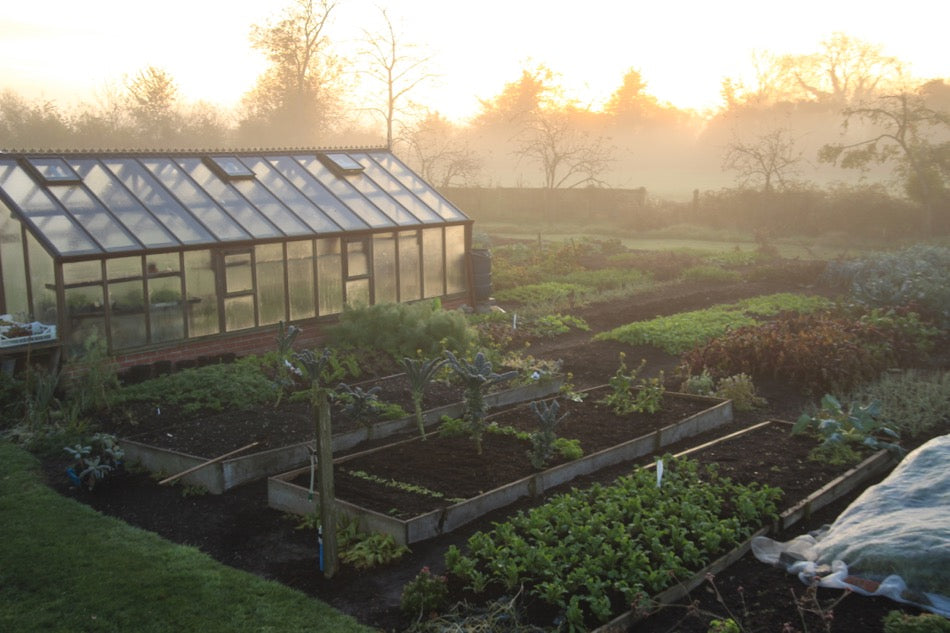
Sunrise at Homeacres mid November ’16

Brussels are leaning a bit, look promising

Carrots sown mid June, no compost given since last December, previous crop was spinach in May/June

Salad in boxes in the greenhouse for picking all winter: Grenoble Red lettuce, coriander, chervil, salad rocket, mustards
Last sowing, broad beans
For the cost of some seeds, this is worth a try. Some plants perish in winter but even if only a third survive, they will make new stems (‘tillers’) in spring and give an early harvest. After the harvest in early summer, there is time to plant cabbage, calabrese, leeks, beetroot and many other vegetables.Sow 2in (5cm) deep, space at 6x20” (15x50cm) and then cover with an inch or two of compost, as in the photo.

Beans sown mid November, then composted over with green waste compost

Same beans the following May, Aquadulce Claudia, I followed them with cabbages
New diary appearing December
It has been a super busy autumn after I decided in August to write and self publish a diary for vegetable gardeners. It has important advice on timings of all jobs, plus a lot of information about no dig, dealing with weeds, making and using compost, and on how and when to harvest vegetables.Its a compendium of what I have learnt about timings over three and a half decades of trying many things. Timings of everything you do are so important, and can save you a lot of time! The diary part is perpetual, any year format so its really a book with space for making notes in an organised way, and many prompts for every week from Valentines Day to November, then fortnightly in winter.
The book is being printed now, then wire bound, and makes its first public appearance at Roth’s Christmas Fair in Bruton on 3rd December. You can order it here, for delivery in early December, and it will be available in bookshops, perhaps on Amazon but I am pondering that one.

Diary cover, 168pp, laminated cover and wire bound, 160 photos
No Dig Home and Garden, appearing April
Steph and I have just finished writing No Dig Home and Garden, a combination of growing, preparing food and making potions, published by Permanent. It is in the edit stage now and comes out in the spring.There is advice on starting a no dig garden, improving soil fertility, being prepared for pests and making compost. I concentrate on the skills you need to grow great food. Steph gives growing advice from the no dig gardens she has created and worked in, including her own in Bruton, and many recipes for the delicious vegetables and also for making potions for use in the house and garden.

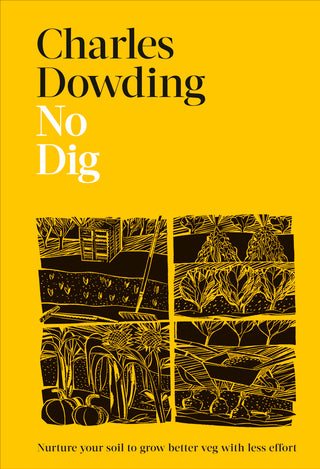
The cover of our book, pub. Permanent in April, 192pp large format

Some of Steph’s food for a course at Homeacres
Courses
I am posting course dates for the spring; as Shelley wrote, “if winter comes, can spring be far behind?”We just had a lovely group of gardeners for the weekend, including some who are creating a garden to supply a restaurant, others who are supplying into Bristol, a permaculturist from Hamburg and others who just want to make their growing space more productive. The weekend before, I had many students at two courses on no dig, at the Organic Centre in the north of Ireland: one participant flew over from the Czech Republic.

The group for Homeacres’ weekend course in November

Students for my course at The Organic Centre, Co. Meath
Veg pics
The colours of autumn are present in Homeacres’ salad harvests, especially with red chicories and a mustard called Red Lace. The Brussels are swelling nicely and we had a first meal, mostly I appreciate them after Christmas when other greens are scarcer: Doric is a good variety for later harvests.
Salad leaves 2nd November, all grown outside

Veg harvest 4th November, cabbage are Calicos and Filderkraut

Brussels Doric F1 which I like for how it stands until after Christmas
Chillies
After a final harvest, you can prune chilli plants to a few short stems off the main one, as in the photo. The keep the plants in any frost free place, with the compost more dry than wet, until they start to sprout in the spring.My oldest chilli plant is now four, and gave another lovely harvest; its a Jalapeno, and I have a three year old Lemon Drop. Other plants in the photos were grown from seed this year.

Chilli in front is a four year old Halapeno

Chillies before final harvest and prune

Same plants after harvest and prune, now in my garage until harder frosts
Online course
This is now available for £75 and for a whole year instead of six months.Here is a link to a course I am giving at Sarah Raven’s garden in Sussex, next May.

Online course, I show how to create and fill a bed like this, on weeds

We sowed and planted the bed on the same day it was made, in May

Veg growing three months later, see also yacon below
Yacon, ulluco, oca
Yacon is now ready, while oct and ulluco need more time for tubers to swell, even after their leaves and stems are frosted. I harvested an ulluco plant to see, and found only one tuber! the size of a broad bean seed.Of these three vegetables, yacon gives the most to eat. Best wash them at harvest time then put in a box on a sunny windowsill, to enhance their sweetness and digestibility.

Yacon in early November before the frost: there are six plants here 20in (50cm) apart

Five days later

Harvest of one plant, 2.8kg (6lb) of tubers and many buds for new plants next spring
Allotment clearing, no dig
Louise Tuffin came on a course here in the summer and showed us photos of her productive allotment, which two years ago was overgrown with bindweed, nettles, docks, marestail and other invasive perennials. She strimmed, took a photo (wishes she had thought to take one before strimming) and then mulched with polythene from October 2014 to late spring 2015, and has impressed the other allotment holders with two years of plentiful harvests from what looked a lost cause. All without digging, as Louise explains:’I have a business and work six days a week so needed a less time-consuming method of growing, initially to clear a very out-of-control allotment, and then to grow produce for my tearooms. No dig is the only method where I can crop a good area without exhausting myself.’

After strimming and before the polythene mulch, October 2014

Louise’s no dig allotment inJune 2016
Squash and pumpkin seeds
Squash store best in dry warmth, mine are in the conservatory and look pretty there. We have been eating the delicious Crown Prince: Steph roasts them to enhance the sweetness and they really are special. I grew them on ground that was weeds in April, through a polythene mulch. Next, I look forward to trying a Marina di Chioggia which I was given by Annabel Storrar, its a variety that has performed very well in taste tests.We cut open a Pumpkin Nut to harvest its edible seeds, large and dark green. They are delicious but it was a small amount, and the flesh is pumpkin not squash.

Pumpkin Nut cut in half

Seeds extracted, not many but they are delicious

Indoor veg for winter: chillies, yacon, Marina di Chioggia
More on mulching
I received this message from Lynn, a no dig gardener:“While most people are complaining about the work in clearing fallen leaves I cherish mine as they are are a brilliant source of mulch.
I was trying to persuade a 75 year old friend to go no dig rather than give up her allotment
But she felt she could not get enough mulching material. I think this is a big consideration for many people, either the work or the cost involved.
I think no dig is superb. Just think if everyone had some veg beds in their garden, what a boost it would be to the country's economy in lessening the need for imports.”
I am asked this a lot, “How can I practise no dig without using tons of compost?”.
1 You can use polythene to kill weeds initially, as Louise did above.
2 To grow good veg one needs to feed soil with organic matter, whether you are digging or no dig. Vegetables are demanding plants and need rich soil. When soil is dug, some of its organic matter (carbon) is lost by oxidation, so you actually need more organic matter when digging than with no dig.
A mulch of even one inch will repay itself many times over, in better crops and less weed growth. Check stores like Lidl for compost sell-offs. No dig works with even a half inch (1cm)mulch, I have done that in the past, but there were more weeds than when the mulch is 1-2in (3-5cm), see the evidence of these photos.

Weeds on the dug bed of my experiment in April

Weeds same day, on the undug bed, both have spinach and parsnips growing here