September 2020 no dig, new book, interplant, sow, space, pests, apple(s)
Growth this summer has been strong and abundant, with few weeds thanks to no dig. The garden is full, but we are still finding just enough gaps to set out new plants, and making new sowings in trays, see below.
Average afternoon temperatures from 1st to 28th August were 23C 73F and nights were 14C 57 F, warmer than usual. Sunshine of only 122hrs is 30% down on average, rainfall of 121mm/4.8in is 30% above average.

Second plantings of summer, asparagus at back,15th August

Second plantings of summer, asparagus at back,15th August

Same view 15 days later 30th August, wonderful growth and some wind damage to climbing beans top left
No open day
So sorry we can’t do it. Here as a small recompense is a video tour of the garden, filmed 31st August.
Sow now!!
In early September you can sow lambs lettuce (corn salad), mizuna and salad rocket in any spare corners outside. For salads to grow undercover through winter, this is prime time to sow a range of vegetables and herbs, from lettuce and endive to mustards, land cress, winter purslane, sorrel, tatsoi, coriander and chervil.
It’s still just possible to sow spring onions and spring cabbage. Don’t delay even one day, for these plants to have time to grow large enough to survive winter.
Before transplanting in a few weeks from now, it’s good to spread compost for the year ahead. Also a little woody material on paths, no more than 3cm. This helps path soil to stay fertile, and roots can use it for food and moisture.

Spinach Medania pricked out. Can also be multisown, asap

Pricking out lettuce five days after sowing

Endive sown three weeks earlier to plant outside. Can be sown now to grow undercover
Apples and Apple
The harvest of apples here is not good, after too strong growth in April, followed by the frost of 12th May. Only a few fruits survived in Homeacres frost hollow (!), and many have coddling moth, or are rotting. Just too weak.
It’s similar with my Apple iMac. It failed on 21st August, never to power up again, and was only just accepted by Apple for repair. It is 17 months old.
Photos for this blog are from my (Apple!) phone.

Rotting Ingrid Marie

This Lord Lambourne is good! M27 rootstock, 8 year tree

iMac dormant, garden lively!
Brassicas, pests and new growth
Brassicas including Brussels sprouts, cabbages and kale have benefited from the rain. However, butterflies and moths are not deterred, I spray brassica plants with Bacillus thuringiensis every 18-20 days.
This worries some, because of the use of Bt in genetically modified crops such as cotton and corn. This does not make Bt bad of itself, nor does it make cotton and corn bad! Bt is simply a soil bacteria
We are picking lower leaves of kale, not too many, keeping all brassica plants tidy too. Simply remove lower leaves before they go yellow. One result is fewer slugs under the plants.

Brussels sprouts transplanted 11.5 weeks ago, this bed grew carrots already

Kale transplanted 11th June after clearing spinach

Cabbage transplanted 11th June after clearing broad beans, is 6th consecutive year of cabbage in this bed
How to judge ripeness
I covered this in my melon video. Fruits turn soft, or change colour. Cucumbers turn from pale to darker green then more yellow as seeds form. Watch fruits to learn the stages.
Winter squashes may now be close to harvest, and watch for the stalks drying, the key sign. They are maturing here earlier than normal.

Kuri top and Crown Prince bottom with corn between. These squashes could be harvested now but can also be left a while, they do not need anything placed under them

A nice ear/cob of Earlibird, pollinated fine even though not in a block, had brown tassels, grown with squash

Raspberries Joan J, easy to know when these are ripe! I have lost many to the weather – mouldy in rain, or damaged by wind
Dig, no dig so interesting
These two beds are endlessly fascinating. Sometimes small differences, sometimes large ones.
Cucumbers suffered more mildew on the dig bed, carrots come out cleaner and larger from no dig, French beans are better on dig, and celeriac looks stronger no dig.
Both beds measure 1.5x5m/5x16ft, and have the same amount of compost once a year. Yields from the year’s first plantings were 46.4kg dig bed and 52.5kg no dig. We weigh vegetables trimmed and kitchen ready.
From second plantings, up to 28th August we have harvested 13.1kg and 16.1kg respectively. Over the year, no dig is 20% ahead, similar to the previous two years. All from 4cm compost last December, plus a few handfuls of rockdust. No feeds, no Grow more!!

Carrots sown 12 weeks ago, dig top 130g and no dig bottom 160g

Lettuce front before second pick Valmaine and Saragossa, the no dig bed behind and dig bed beyond that, all second plantings

Same view six days later 30th August, cos lettuce in front were wind damaged after picking
New book is out, and Calendar too
It’s been a big project, creating the large book. It’s based around my first online course, and includes the quizzes, with answers too. And it’s hardback, so heavy, as Martin and I noticed while unloading the 3 tonnes of books to Homeacres! They arrived just before the thunderstorms.
The book covers no dig history, my trials here, how to smother weeds, how to make and use compost, and the difference between compost and soil. It’s 240 pages, 84,000 words, 900 photos. Signed copies from this website, also in UK shops, and in the USA from Chelsea Green Distributors, once the boat arrives.
The last two chapters are plans and harvests of the small garden, and one bed by the shed. Examples of growing a lot, through all seasons, in smaller areas.

Nearest is almost ready, filled in spring in bay 2 and turned to bay 1, currently we are on bay 4

The current heap, with a mix of green leaves. brown cardboard (book boxes!) added dry, since the leaves are so wet, I check temperatures

A warm and wet job, running from pallet to house

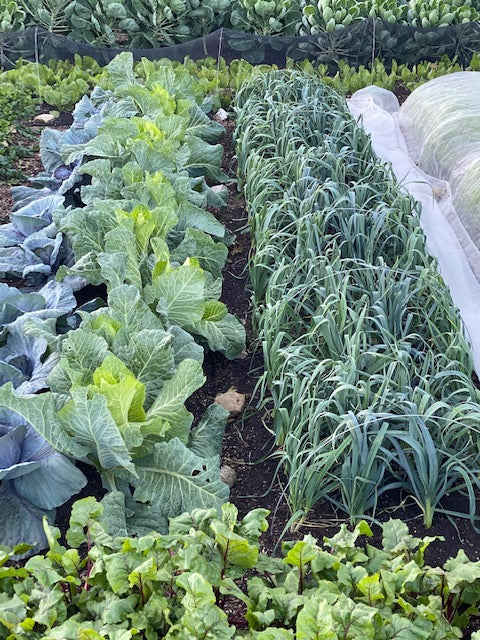
The cover photo is where I am in this photo, one year later, cabbages and leeks in the same beds to my right and left
Interplants
There is often very little free space at this time. You can pop new plug plants between existing vegetables, when the latter are close to finishing.
Examples in late summer to early autumn include spinach between lettuce, spring onions under cordon tomatoes, and fennel between cucumber or between new spinach.

Coriander and spinach between lettuce we pick every week, for another month at most, then twist out

Fennel transplants between cucumber, after we trimmed the leaves with mildew
Weeds and slugs
Do pay attention to innocent-looking weeds, which can set hundreds of seeds in September’s warmth. For sure, small weeds at this time are not competing with existing and established crops, which perhaps gives a false sense of ease about their presence. If allowed to drop their seeds, you will encounter difficulties through winter and spring when hundreds of new weeds may smother new seedling vegetables and young plants, and make more weed seeds.
It has been slug weather, and I am impressed how few we see. The one place with damage is where I spread some less-decomposed digestate, from a methane gas plant, anaerobically fermented rye and maize. So much difference compared to my normal compost mulch.

This is a call to action, where sow thistle seeds blew in and the seedlings need hoeing or pulling now

Almost no weeding needed here, mainly pulling small seedlings of dandelions blown in

Nearest camera is some digestate mulch, ad we already replanted cos lettuce. Top of photo is compost mulch, bed was peas before.
Spacing
Some plants can be equidistant in all directions. My salad spacing is 22x22cm average, whatever the vegetables. If you space closer, plants live for less long.
Tall plants in tunnel or greenhouse are following the line of an overhead supporting wire, and these wires could be up to 90cm apart. Then cucumbers are at 60cm from each other.

Mustards for autumn and winter salad leaves, planted at 9in 22cm

Rows of cucumber polytunnel 60cm apart and 90cm pathway (2x3ft)

Chinese cabbage transplanted 13 days ago, spaced at 37cm 15in to make hearts in late October