April 15th in a cold spring, fleece covers, transplant survival, new bed and compost heap

A difficult spring so far, with a lack of warmth and frosts down to -4.5 C here, nine frosts in the last 12 nights. However it has been dry! And although that means watering new transplants, it also means that growth stays healthy. All my carrots have come up, with no slug damage. That is a little unusual.
On 16th April at 18.00 GMT you can see my new video about growing carrots. And see live weather at Homeacres, anytime.
Looking ahead, things are warming up and exciting times are in front of us. There is still however no rush to sow courgettes and squash (say 20th-25th in view of the cold), nor climbing beans (10th May here). I do plan to sow cucumbers very soon, but on heat for sure.

Broccoli Claret F1 was sown 10 months ago, and is cropping at a very nice rate in the cooler conditions, with many sideshoots

I transplanted what you see and sowed carrots here on 18th March 4 weeks ago, and this bed is slightly sheltered from frost, by the shed and is closer to the house

Surprising even me, eight month old salad plants continue to give plenty every week
Overwintered salads polytunnel
Considering the weather, I am so impressed with how these plants to keep on giving. We have picked them every week for the last six weeks and before that it was about every second week since late November. They are like old friends. I lost some lettuce and we are pulling some lovely radish now, sown February and transplanted 2nd March, multisown.
Sadly within three weeks or so most of them will be rising to flower and we twist them out, then spread compost and soon after that transplant summer vegetables. By that time, the outdoor plantings will be cropping, mostly lettuce.

Pea Tall Sugar sown October has cropped all winter for shoots, we transplanted it early enough so that mice did not eat the seeds and it has resisted the frost

We pop garlic clothes in that line between the lettuce, both are in the ground by mid October and these Grenoble Red have mostly survived the winter, but are growing less fast than usual now

This wild rocket was sown September, and potted on in the greenhouse then transplanted outside in late February. There are some lovely leaves now which I cut
Propagation good & bad
After all these years – I made a chronic mistake. I was worried about frost being hard enough, even in the greenhouse on the hotbed, so although I knew it was risky I put a fleece on my tomato seedlings for just the coldest night. This was just after I had topped up the hotbed with two barrowloads of fresh horse manure. Overnight the ammonia gases singed many leaves and you can see the results. My harvest of early tomatoes is quite compromised and I have sown again. Fortunately a few plants were not covered!
My pain is mitigated by the growing success of the new module trays, CD 60s. Plant roots like them and they are extremely easy to manage. Although of small size, I grew nice transplants of peas for shoots, two seeds per cell.

five week old reserve plants show strong roots of lettuce in CD60 tray for propagation

17 days since sowing, strong roots of radish multisown in CD60 tray

Ah woe is me, I have to look at these every time I go in the greenhouse. This was four days ago and they are looking like a few will survive now.
More bad!!
For a pyralid test (see video), I had not before used seed of field beans. They are more sensitive to this weedkiller then broad beans and the ones I sowed a month ago in mushroom compost and green waste compost are not looking too brilliant at the tips.
Even worse are seeds I sowed into some digestate which I was given. It behaves like no other compost I have ever used, and in fact I would not call it compost because of how it is created. Last year we found that plants struggled wherever we used it as a mulch.
For sure this digestate is fresh, it was warm about 40 C in the sack, so that is part of the reason why the seeds are not appearing. But I have sown seeds into fresh, warm green waste compost and they all grew. I still do not really understand this product. There is no advice that one should not use it as a mulch so if one does that and then transplants or sows, I can’t see plants growing well at first.

Growth point leaves with tips curling inwards suggest pyralid damage – mushroom compost left and green waste right

Left to right is mushroom compost, Moorland Gold compost, new digestate, green waste compost. Both a broad beans and pea seed in each cell with peas showing the best germination all round
Using fleece in spring
Brassica transplants in particular are damaged where touching fleece and when frosts are below about -4 C. As we have seen this year! A reader in Paris lost all brassica plants to weather. of -5C by night and 25C by day. Also she was transplanting into a new bed of compost over cardboard. I don’t know how much she watered the transplants.
Some of my transplants under fleece are looking poor at the moment, with crisp yellow damage to leaves where they were touching the fleece. However there is still healthy green leaf at the main growing point. Onions look ok and so do most leaves where the fleece was held above them.
Normally I do not use hoops or supports for fleece, because it then blows away in wind. As it happens, we have had a little wind this year! More details in this video.

This was Easter Sunday and it was a lovely day after the frost

Again 4th April. New plantings are under fleece and overwintered spinach Medania sown August is open to the weather and giving superset leaves

Broccoli survives spring frosts very well, it has a net over against pigeons

Direct sown radish and carrot 7th April, former damaged by -5C frost where leaves had fleece touching

Frost damage/singe on broccoli, radish (not on the lower growing kohlrabi) leaves where touching fleece

Belstar broccoli transplanted 16 days ago, is surviving, we have watered the transplants three times, just a little
Transplant support
Photos below are all from sowings mid February, except for the carrots sown direct late March. The battens have helped.

No dig bed of my trial, on 1st April. Battens serve to elevate the cover a little

Two weeks later and there is some damage but also some decent growth and carrots have all come up

Lettuce transplanted three weeks earlier, these are Batavian type and looking pretty strong, just a few losses to leatherjacket
I gave this advice to a follower who missed the sowing dates!
BROAD BEANS, sow asap will crop less but still ok
SPINACH, order seedlings!! Sow chard maybe, sow spinach early August
PEAS FOR SHOOTS, go for it
ONIONS sow now for small bulbs, or plant sets
It’s a cold, late spring so you have actually lost less time than normal.
New compost heap
Adam did a great job of knocking off the bottoms of each pallet, which makes them easier to handle and avoids the waste of space around the edges. Meanwhile I used my sharp, copper spade to remove the top or surface roots of ivy, some nettles and a few woody roots of bramble and blackthorn. I want the edge area clear of those weeds.
Then it’s simply a question of using wire to hold the corners together. There are no posts and the photos show how I used cardboard. Later we shall make more heaps alongside. More advice here on this site.

Area for new compost heaps before assembling them, after using a spade to scrape the top inch of ivy roots mostly

Simply wired at the corners, new compost heap from pallets and the cardboard is only to prevent weeds at the sides

Inside the new compost heap showing how we lined it on the inside with cardboard, using drawing pins, not sure how long this will last!
New bed
I made this yesterday for a photo shoot, and once materials are assembled, it’s 3 to 4 hours work for the whole process, including the planting. Details in my Course book & Calendar. Compost here is 9 months old.

Sides will be temporary. show layout of the new bed on the grass and weeds

Bed filled with four wheelbarrows own compost, and stones hold wood in place

A dry April and I am firming the compost of a new bed just filled.

New bed all planted, with potatoes this end and carrots sown across the middle

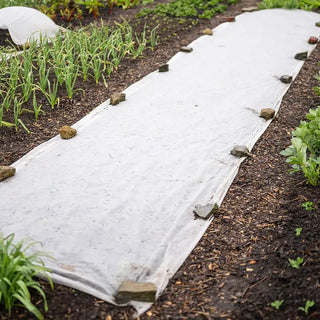
New bed fleeced over with hoops, risky if windy but good if frosty
Perennial weeds pushing up
When you make no dig beds on the top of existing perennial weed roots, there is almost always some follow-up work to do. It’s important to keep pulling any regrowth. Sometimes use a trowel to remove a little more root than comes out when you pull.
We have some larger areas under polythene and a very vigorous hogweed, so we pulled the polythene back and used a spade to lever out more of the top growth than would be possible with a trowel. This area has yet to be finished with compost mulch.

Perennial creeping thistle needs pulling and I find that although these look strong, by July after three or four pulls, they will be gone

Common hogweed was growing in darkness under polythene, we use a spade to lever out the top and weaken their strong roots

Common hogweed pushing through woodchip, we use a trowel for this
Excitements
I was thrilled to see that the Scottish government esteem my online courses! I don’t know of any other countries following this approach, which is for women in agriculture (sorry men!). And the readers of GYO magazine have nominated me for some awards, and they have many many categories of voting!

We were excited to see this Scottish funding for my online courses. I know of no such funding elsewhere, I’m afraid!

Do vote if you have a chance and want to!