June 2020 extreme weather, early harvests, mulching, no dig garlic, webinars, insects, keep sowing, problems with bought composts
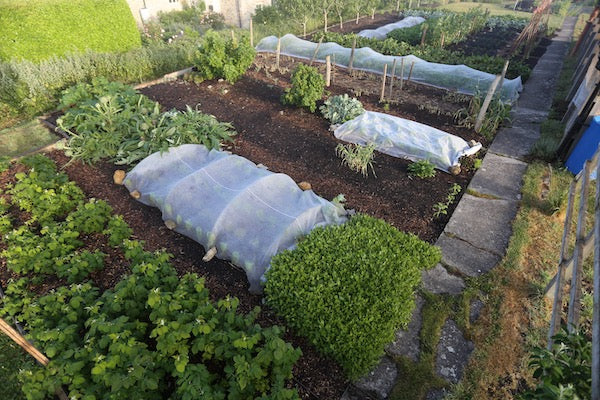
May was the driest ever month here, in 47 years of my records. 1990 came close with 4mm rain compared to 3.2mm (0.13in) in May 2020. In the last 20 years, the previous driest May was 2010 with 34mm, so 2020 is quite an outlier. Plus it was the sunniest month I ever recorded, with the second warmest days and the third coldest nights!
In contrast, I am sorry to hear of endless rain in parts of Eastern USA . It seems the weather gets stuck for longer in any one pattern.
We are watering a lot with the hose, mostly to vegetables which are cropping or close to cropping, every three days or so. Also to new plantings, until established, which can be 5-10 days.
In place of courses here and talks elsewhere, I am giving two Zoom webinars about no dig. They cost £25 and the first one is about starting no dig, then a week later the second is my answers to your questions.

Trialling mulches of seaweed and miscanthus in the polytunnel

Homeacres no dig garden 28th May, just the two raised beds

New celery and celeriac under mesh and beans to right are cropping well
Spring harvests
We are ten days ahead and already have so many first harvests. I love this time for all the new flavours. Because of the earliness, there will be more time to make second plantings, as long as we have access to water. My second online course explains this in detail.
I have a small problem with Boltardy beetroot sown late February, transplanted late March. The leaves look good, but many roots are smaller than I find normally, with paler colour and fatter leaf stems. There are two seed batches, one from Kings and one from Vital Seeds. The grey trug is by Loldean Timber.

Harvests of 21st May, all grown outside, onions Lilla multisown September and broad beans November, fennel sown February

Harvests of 26th May include carrots sown 16th March and broccoli sown mid February

Beetroots from same seed packet Vital Seeds, Boltardy sown late February
Sowings and transplanting in early summer, finding space
You can sow celery and swede/rutabaga in early June, and beetroot plus carrots at any time during the month. Around mid month is good for broccoli to over winter, kale too.
Leek plants can go in the ground any time from now. We have potted on the module sown leeks so they continue growing, while spring plantings finish, such as peas and potatoes. Generally I recommend to sow 3-4 weeks before you anticipate having space available, because most plants thrive when they go out small. Timing counts for a lot, see this video.
See my video made on 4th June for more ideas.

Runner and borlotti beans trapslanted late May and part mulched against drought with miscanthus, lettuce beyond picked three times so far, fennel is harvesting now

Thumbnail for video on transplant timings, generally it works best to get plants in the ground when small

These red and white cabbage for autumn hearts, and kale, will go in after broad beans mainly
Companion planting
Many people ask about this, but what does it mean? For me it’s mainly proximity, that plants like to be close to other plants.
As for variations of friendliness, I have found few problems happening. Poor fennel has an undeserved bad name! Main thing is that growth patterns are complimentary, so I would not plant lettuce near a courgette plant. Try a few things to see.

The lettuce, fennel and spinach this end were all transplanted mid March. I am now harvesting the fennel and lettuce leaf harvests have happened since 20th April, outside

I found a space for tomatoes, between garlic in the small garden

I would not look for space to grow vegetables in a densely planted flower garden, but you can if gaps allow, just watch for slugs
Mulching
To mulch is to cover with any surface matter, even polythene. I use no plastic and am famous for advocating compost mulch, in order for slugs not to breed. Here we now have arid conditions and I am trialling a few undecomposed mulches.
The miscanthus is only a thin layer, 2cm or less than an inch. The seaweed is soggy and could result in slugs, if weather were wet. Is best applied in autumn, for soil fertility.

Polytunnel cucumbers all mulched with compost, and we spread miscanthus grass around a quarter of them on the side catching most sunshine: my tunnel is East – West oriented!

Outside the tunnel we transplanted phacelia last September and it is now full, full of bees
No dig in Scotland
Last December on a course here we hosted farmers from Munlochy near Inverness, who wanted to learn more about no dig. They sent me photos of the wonderful results, and it’s a neat comparison of garlic grown in two different ways. Their FB page is here.
I am jealous of their lack of rust, seems not a problem up there! Here it’s gaining ground and probably means an earlier harvest. We pull the polytunnel garlic around 10th June and outdoors around 25th. Don’t wait for it to be all yellow leaved, they are at least half green at harvest.

Inverness, rotovated soil and composted manure incorporated, garlic planted October

Inverness, no dig mulched soil, garlic multiplanted December after my no dig course

Homeacres 30th May polytunnel, garlic within 10 days of harvest
Insects
Asparagus beetles have discovered Homeacres, and it’s perfect weather for them, suddenly so many. The only remedy I know is squashing them in summer. At the moment they don’t cause too much damage.
Flea beetles are more problematic and we made a video to explain them more, with some remedies. In the UK, flea beetles eat mostly young brassica leaves: some farmers have had to stop growing oilseed rape (canola) because they can’t control them even with pesticides.
In the US, flea beetles eat solanum family vegetable leaves. and I wonder if they are a different strain. I hear about a lot of damage to aubergines/eggplants.
Caterpillars are here already but I am not spraying Bt yet, the cabbage and calabrese are good so far. There is a problem with availability of Bt and I am unsure what is going on. You can buy aminopyralid poison, but not the Bt soil bacteria, it makes no sense.

Asparagus beetles, no remedy I know except squashing

Mesh covers keep insects out, in this case kept wind and rabbits off

Calabrese so far unprotected, cropping now from mid February sowing
A tonne of manure, hoping for no aminopyralid
On 28th May we found time to empty the greenhouse hotbed of it’s 2-3 month old horse manure, with some wood chips too. See how we made the heap in late February.
Moving the manure now is a chance to mix and turn it, and removes a lot of woodlice (pillbugs) from the greenhouse. We add some water to the manure where dry, and to grow vegetables on top.
We spread some compost as final layer, to plant into. The new plants start rooting in this compost, then root into the manure below as it cools. Currently the heap is at 43C, too hot for roots.
Horse manure is at a small risk of contamination by aminopyralid weedkiller, occasionally sprayed on grass for horse-hay. Its the only weedkiller I know which persists for so long, and it’s lethal in tiny amounts (almost unmeasurable) which is why lab tests are mostly a waste of time and money. It’s highly damaging to potatoes, tomatoes and legumes, whose growing tips become curled and twisted, see the bottom of this page.
My plants on this heap are susceptible to the weedkiller, so we shall see. It’s a test, before I spread it in late autumn. I am not expecting a problem but the awful thing is, you can’t be sure until doing a “bio-assay”, more effective than a lab test. Beans and tomatoes are best for this in summer.

April 23rd after we topped up the hotbed with some fresh horse manure (is hidden in the middle)

Hotbed late April was warming basil, cucumber, squash, aubergines

May 28th after emptying and removal of pallet on posts, melons to right and small garden top left, clean area for propagation

Edward my son helped move the manure

I was breaking up lumps and watering where necessary

Pallet enclosure is lined with cardboard to retain moisture and warmth

The wood chip we added in February is showing lovely mycelial breakdown, is mixed with manure

Manure from the middle at bottom was still yellow and quite smelly, better for being turned

After spreading compost on top and planting aubergines mostly
Compost problems
It upsets all of us to see plants being throttled by weedkiller, and it’s happening too much. Grazon weedkiller (contains aminopyralid) is applied to pastures and clopyralid is sprayed on lawns, often by contractors and without the owners knowing. This stuff is really out there. See my videos for the effects on plants.
This poison is in hay, from there in manures, and it’s in some (not all) proprietary composts of many kinds, except for organic approved. Any sack of manure or compost called simply “organic” is not truly organic in terms of ‘produced from certified organic fields and farms’, and the description organic on compost sacks carries no weight. It’s organic matter.
Most problems have occurred with horse manure, from a desire among horse owners for ragwort free hay and dock/thistle/nettle free pasture. However this spring, there are problems from cow manure, for example from Godney in Somerset.
Another issue is compost companies making poor “peat free” products. For example it looks like Bord na Mona are better at peat compost, than making potting compost from green wastes. When you buy a sack, you don’t know this. Seems they are rushed to market without verification by growing plants.
My “best buys” are all organic approved – Melcourt, Dalefoot and Morland Gold.

Compost in pot has a two moth old tomato, not an aminopyralid problem but too much wood or what, in Bord na Mona Happy compost, in Tony Gordon’s garden

Godney aquaponics smallholding has been hot hard by weedkiller in cow manure, as with these French beans, compared to a healthy bean in front
Dave Goulson’s The Garden Jungle book is a welcome distraction to this, and celebrates a garden’s many inhabitants.
Below are comments I received just in the last few days
Alex You Tube
My first real year growing vegetables and my peas have all been struck by this weedkiller. I thought I’d made a mistake somewhere but I’m pretty sure this is what has been going on. Also had terrible growth on peppers and beans grown in bagged compost.
Ewa Kozyra You Tube
I am having this problem now in my garden, it’s so sad. The same signs of damage are apparent in organic pepper seedlings from Bonnie’s plants (as seen just today in Home Depot) and most likely in other plants as well. It looks like this stuff being happily sprayed all over the US now, ironically also in “natural areas”
Cackleberry Garden
I am a victim of this very recently, I used alfalfa/timothy hay on 3 tomato beds… 7 years of building beautiful soil… Curling sad, deformed tomatoes. Since they’re raised beds, we scraped the soil.
The photos below are from a midwife in the English Midlands, who cannot believe this damage!

Overwintered and healthy chilli plant was top dressed with the Westland compost six weeks earlier

Cucumber seedling was potted into the Westland compost at which point it was healthy

From a label you cannot deduce much at all, especially the potential problems
Season change
Growth has been fast, if one can water. May is such a lovely month.

April 28th

May 30th

Other side of the tall peas – peas for shoots and seed