May 2020 update, fast new growth but frost returns, sowing methods, pea supports, compost heaps, carrots, slugs & flea beetles
We just had a week of summer weather, now winter returns briefly. Old weather lore refers to the ice nights of 11th-13th May! I hope you can cover potatoes enough to protect them, and any other frost sensitive plants. I have never experienced frost on plants that are so forward, such as broad beans actually cropping! Usually they are flowering at last frost.

Unseasonal harvest on 9th May, outside, sown November transplanted December

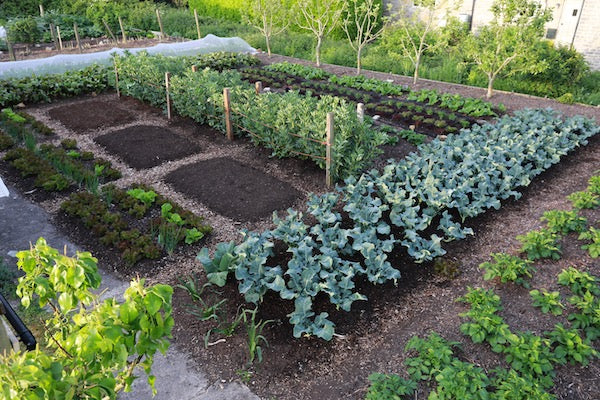
View on 10th May, with empty spaces for new plantings of frost-tender cucurbits mostly

Seasonal harvest outside from home-saved seed of Medania spinach, sown and transplanted last August
Late frost
It’s the gardener’s nightmare, early warmth followed by late cold. April here was the sunniest ever and unusually warm, May started warm until 10th. Now we shall have a night or two of freezing, how cold depends on each garden’s microclimate. Built-up and coastal areas see less frost.
Homeacres is in a wide valley so tonight I expect -2 or even -3C, perhaps 27F. Fleece gives some protection, if it’s not too windy to secure on the evening before!

Potatoes Maris Bard, first early sown early April

Courgettes transplanted early May, a gamble, fleece over may not be enough if it’s -2C

These tomatoes and basil will be fleeced over this evening, after I untie the strings at the top
New growth
I never imagined picking broad beans on 10th May. I used to think that 30th May was good going! The garlic also shows how much growth can happen when spring is warm. I hope that it warms for you soon in Orkney, Ontario and parts of NE USA where I hear about late snow.

On 4th April, planted late September, this garlic was barely visible over winter.

On 9th May just five weeks later, no dig means few weeds

These are almost ready and won’t do well if frozen!
Lettuce banker, almost
Spring is the season for lush new leaves on lettuce. The high light levels, without too much heat, suit it well and it’s now the main ingredient for my salad bags. Salad rocket and mustards are now in flowering season so we add pea shoots, sorrel and beet leaves instead. Dill replaces chervil.
One snag for lettuce, spinach and beetroot this spring is leatherjackets, see my post for early May. Wow the mild winter helped them survive! We feel through the compost under eaten plants, to find them. Not a pleasant job.

Transplants of 20th March, before first pick of 1st May

Lettuce of bed to right has just been picked for the first time

Lettuce in May from a September sowing, Grenoble Red outside, has been picked seven times
Sowing methods
I had two rows of parsnips not germinate. My fault, two year old seed, thought to try. So with newer (one year old!) seed I dibbed holes between the lines of radish, and popped three seeds in each, then watered the rows. It was quick, the surface compost is soft.
On 9th May I sowed French and climbing beans, Borlotti and runner. One seed per cell, the trays on my hotbed in the greenhouse. It’s still early for outdoor sowing because they need warm soil to get away well, by late may here.

Holes dibbed for parsnip seeds, three per hole between the radish

I filled the holes after sowing then watered the lines

Greenhouse propagation hotbed 10th May, cucumbers aubergines peppers, and newly sown trays of beans
Carrots
My main sowing of 21st March is now growing well and we even thinned them a little. Very little weeding needed, it’s homemade compost which heated sufficiently to kill weed seeds. Not that there were many.
The French Breakfast radish were good too, last week. I kept the fleece on after that harvest.
At this stage I find it best to replace fleece with mesh. Cooler, and better protection from root flies.

Pulling the radish 30th April, sown at the same time as carrots, on 21st March

Same carrot bed a week later, beetroot in front were transplanted on 20th March

Carrots are now covered with mesh against insects and rabbits, over hoops of 5mm wire
Compost heap sides and moisture level
Moisture comes mostly from green leaves, and until through spring they are quite moist. That may change soon. Also if you add extra brown it may be that some watering will help.
It helps to conserve moisture by lining sides with cardboard, to hold moisture and warmth. It’s a myth that air needs to enter the sides.
Currently we are spreading last autumn’s heap in the polytunnel, after pulling winter salad plants and before planting summer vegetables. The thickness is about 3cm or just over an inch, after walking on it. I do that to conserve moisture and help roots develop better, they like it firm. Which is not the same as compact.

Homeacres current compost heap, any slatted sides are lined with thick cardboard

The last of my eight month old compost, being spread in the polytunnel
Supports
Peas and broad beans have grown in the warmth. Now they may be regretting it! We have 35mph/58kph gusts as I write, and only just above freezing too. I am always amazed at what plants can tolerate. Pea stems for example feel so fragile.
The photos give ideas for how we support them. The old fashioned hazel branches are excellent for offering many twigs to pea tendrils. The long strings need more time to slot growing pea stems up the middle and on the correct side for support.

Hazel branches and a few stakes supporting Cascadia pea plants, a medium height variety 90cm 3ft

Stake and string supports for tall peas, these stakes are18 years old, string is from straw bales, Alderman peas grow to 2m 6.5ft

Broad beans transplanted December and almost ready, broccoli in front is starting to head from 23rd March transplant
Slugs and flea beetles
A tidy garden has fewer slugs. Compost mulches harbour fewer slugs than mulches of straw. Yes, compost is a mulch, contrary to what I often hear.
Slug control comes from good gardening to prevent them, rather than remedies to kill them. I just hate seeing the way that slug pellets are used so massively, so much poison, so unnecessary. The first photo below is NOT Homeacres!!
Pellets kill a lot of beneficial life which then cannot help plant roots. Even so-called “organic” slug pellets contain harmful chelates (binding agents), which have slipped below the ‘organic’ radar. Please don’t use them.
For flea beetles, best remedies are 1 use finest grade of mesh, and 2 raise seedlings undercover, where the beetles are less numerous than outside.
Plus don’t expect unhealed leaves in brassica salads until autumn, unless in a coastal or remote area.

From an allotment, unnecessary use of poison

My kohlrabi outer leaves were eaten by slugs, we removed them to give less interest to molluscs

Flea beetle damage on outdoor growing salad rocket, now flowering and removed to compost heap
Flowers
April sun after March showers, brings forth May flowers!
Suddenly there is a feeling of summer riches, and roses even. In the hedgerows are boughs laden with hawthorn and some early elderflowers. The ash trees are coming into leaf, but they don’t do well in frost.

Sweet William survived since last summer, when I cut it back after flowering

Perennial iris and Rosa de Hecht in my front border

Escholzia or California poppy, self sow here every year and emerge in late winter, were two different varieties