September 2021 pests, propagation, transplant and interplant, tomato, cucumber, bindweed
After some dry summers recently, when we dreamed of having more rain, this summer we had welcome rain and growth has been abundant. And the other result is slugs, snails and late blight, especially on tomato plants – see my new Small Garden video for details of those.
At least we have had steady summer warmth and almost all vegetables have profited. One tends to focus on the negative because problems need to be sorted, but growth of vegetables and flowers is mostly excellent. It has been good weather for transplanting and interplanting too.
I look forward to meeting some of you next Saturday 4th September, when we have open morning 09.30 to 12.30, and open afternoon, 14.00 to 16.30, as ticketed events in aid of charity. There are some places still available for both times.
I was interviewed recently by Lewis of Somerset Stories and you can hear more about my life with no dig in this new podcast

No dig view, with lettuce transplanted 16 days earlier, brassicas on 4th July

Harvest 26th August melon Emir F1, Tenderstem broccoli Green Inspiration F1, Sungold and Sakura F1, Defender F1 courgette, Padron pepper, Loretta F1 celery, Matador F1 shallot, Black Russian tomato & Crimson Crush F1, the latter grown outside

We transplant often very small seedlings, then cover for up to a month against pests. This bed was onions and we just transplanted salad rocket, mustards and Chinese cabbage
Problems and solutions
There is always an answer, and many possible strategies. No dig, using covers at appropriate times, and sowing at best time help to ensure healthy growth, which reduces pest damage. Find more about sowing dates in my website timeline, and Calendar of best sowing dates. We offer deals on purchases of the Calendar with say my No Dig book.
In difficult moments I favour night sorties to reduce slug numbers, careful watering of indoor tomatoes to keep leaves dry + blight resistant varieties outside, and growth of alternative plants such as endives in late summer for salad leaves, since they do not succumb to root aphids.

Summer slugs are quite large, these were under a plank of wood on the ground, see the bindweed roots too

Lettuce root aphid causes plants to wilt suddenly, within a day often. Interplant is mustards

My Calendar informs you about sowing each vegetable at its best time, to increase your chances of successful growth with fewer problems
Transplanting tip
Plant small for rapid establishment. As long as you have pushed compost firmly into the cells of module trays, seedlings can be popped out any time from one to three weeks after sowing.
“Don’t tell a plant it’s been moved”. Little transplants suffer less check. Healthy no dig soil helps, see the next section. Find out more in the spacing and transplanting module of my online Growing Success course.

Small size of transplants with salad rocket this end, was 13 days since sown

Two weeks later and growth is strong – we shall start picking larger leaves (not cutting) in about ten days
Interplanting
Plants like companionship, so when setting any out at wide spacings you can often gain a free harvest by filling the space between. Use either plants which grow more quickly to harvest (leeks between celeriac), or whose pattern of growth does not interfere with the other plants (sweetcorn with squash).
Now in late summer many gardens are very full, meaning there are few new spaces for transplants or seeds. Therefore it’s good to find space between existing plants, which will finish cropping say within one month. Lettuce are the best example, even spring broccoli, also see ridge cucumbers below.
No dig helps because the healthy network of mycorrhizal fungi link new plants to the older ones. They do trades and work together in wonderful ways, see Dr Kris Nichols’ video.

There was space between my celeriac plants in June for these interplants of multisown leeks, almost ready to harvest

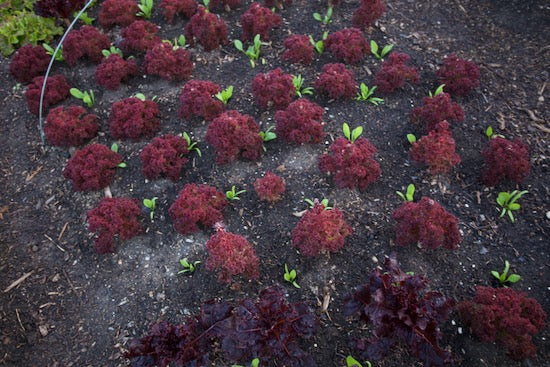
Lollo lettuce we pick weekly with Medania spinach interplanted between, six days earlier. Soon the lettuce rise to flower and we twist them out.

Sweetcorn have grown nicely between Crown Prince squash, all through black plastic
Trials, nice growth
I love to run trials because they always teach something new. Discover more on my website Trials page.
One striking difference this year is the stronger growth of the dug bed, in my two bed trial. Harvests are still behind the no dig bed, but with a smaller difference the in previous years.
I suspect this comes from removing the wooden sides last December. Plants growing in the dug soil can now access help from fungal networks in bordering pathways.

25th August, dug bed on left and no dig on right. Same plantings and same amount of compost for each bed, this is year nine. More harvests from no dig per area and per amount of compost, for less time needed

No rotation trial, year 7. Broad beans preceded brassicas, and year 7 potatoes preceded leeks, all are healthy and vigorous

Homeacres three strip trial 27th August, many interesting variations
Propagation now
It’s soon too late for sowing spinach to plant outside, but still you can sow mizuna, salad rocket, lambs lettuce/corn salad, chervil, coriander, Claytonia and land cress for outside planting.
For growing undercover, almost any salad plants are possible! Best sowing time is early September, then up to equinox for brassica salads which grow most quickly.
My new design of module trays are working well. They need only a small amount of compost, are economical on space, and plants pop out easily. You can buy them from Containerwise in the UK and The Farm Dream in Europe, who also sell some of my books and the Calendar. Containerwise may soon ship to the USA and Canada.

Medania spinach 15 days, is ready to transplant and is multisown 3 seeds for 2 plants, in CD60 trays, home saved seed from last year

We planted the Medania after clearing wild rocket, then we watered the bed and spread one barrow of 10 months old homemade compost, notice the lovely brown colour, not black

Mustards are good to plant at this stage, but would have established then grown more quickly if they had been transplanted one week ago. These are leftovers I keep, in case of filling gaps
Pak choi transplants
Pak choi are often eaten by slugs. I want to encourage you to plant small, in beds with no wooden sides!
Using my wooden dibber saves backache, and is energy efficient from making a hole exactly the right size, just a little deeper than the module. Stems can always be below surface level.

It’s quick to dib holes for the small plug plants from CD60 trays, and these are two week old radish plus pak choi plants. I had just harvested the last celery from this bed.

Ten days later, with mesh against insects on radish and pak choi

Now 14 days since transplanting and the mesh will stay on for at least another month, against insects
Tomatoes
A slow year, But it’s finishing better as long as you have no or minimal blight. See this video we made for Instagram, after I discovered blight on leaves in the polytunnel. It is however not calamitous on those plants, which are still cropping well.

Polytunnel Sungold tomato plants in evening sunlight, they are cropping well now with manageable amounts of late blight

Beef tomato salad for a course lunch, Yellow and Red Brandywine & Black Russian, prepared by Cat Balaam

New tunnel tomatoes are super healthy and cropping nicely, in the best of their season now
Cucumbers and interplants
We have picked so many cucumbers, both under cover and outside. The outdoor ridge plants will soon finish, so we interplanted bulb fennel for October harvests.
Don’t worry about powdery mildew on leaves, it’s normal as plants age. Remove leaves if you wish, or not!
See more about growing cucumbers in my online lesson. The online lessons include unique videos not on You Tube.

Carmen F1 cucumber plants in the polytunnel have reached the top and are now growing down, three months since transplanting

An interplant of fennel between ridge cucumbers Tanja. We first removed the old leaves with powdery mildew.

Dill interplanted between cordon cucumber plants
Vegetable garden beauty
I so appreciate the beauty of food gardens, and just love the garden right now. The third dimension from May to October makes a nice difference, as well as the colours and vibrance of all plants.

East end evening light on 26th August, sunflower Kleinblumig on left, Bingenheim seeds

Borlotti bean teepees at the end of summer, these are for picking dry pods in early October, all being well

Flowers in the no dig garden include Carousel zinnias and dwarf French marigolds
Bindweed
It’s losing vigour here! The combination or mulching, no dig and regular removal means that new shoots are thinner.
Plus we have had nice amounts for adding to the compost heaps. See more about results from different heaps, in this video.

Transplanted 4 weeks ago and this is 18 days since removing bindweed, which Adam just did on the right side for comparison

4 months since making this bed on much bindweed and we have removed new bindweed shoots about seven times. New transplants of bulb fennel

The area with a cover together with the leeks is where I grew potatoes, using black plastic against the bindweed. We harvested 130 kg of potatoes and then planted broccoli raab under the cover and the leeks you see, and we now remove bindweed with a trowel
Courses
Homeacres courses keep selling out, and we posted a new date of 15th September.
If you can’t make it here, learn no dig in my online course. We also offer online lessons about growing all the main vegetables, including spinach, and price offers when you buy bundles.

Day course group on 15th August, assessing the no dig bed of my two bed trial

My online courses have lessons for each vegetable, such as this spinach in April which was sown 8 months earlier, growing outside

The weekend courses give great opportunity for meeting other keen gardeners from very diverse backgrounds and locations, and we all have a great time