

|
||
|
Every day can be a new year, and I wish you garden abundance ahead. Time to plan |
||
|
||
|
I'm working with Growing Interactive, who have modified their garden planner to fit the principles of No Dig and other useful methods. Such as minimal rotation, interplanting without extra feeding, close spacing and multisow. |
||
|
My planner has a seven day free trial, and I was delighted to see this comment on YouTube, to a short video I had posted about it: |
||
|
I’m really pleased I’ve discovered your garden planner. I’m currently on day 4 of your 7 day free trial and I’m really enjoying working with it. My (quite complicated) allotment layout is already drawn out in the planner, most of my perennial plants are in my plan too and I’m now starting my planning for next growing season. I’m actually that happy with the planner, that I will be showing it in my latest allotment vlog I’m currently preparing. And I’m totally going to subscribe for a paid version. |
||
|
For those of you in different climates and locations, the planner takes all that into account when you enter your coordinates. Such as the 6 months change-around for those in the southern hemisphere. |
||
New video series |
||
|
||
|
Last year was extra intense for me because of fitting in a lot of filming, between my other jobs. I have wanted for a while to create more how-to videos such as the beetroot, onions, and lettuce, which have been on my channel for a while and are much viewed, with comments reflecting how useful the viewers find them. |
||
|
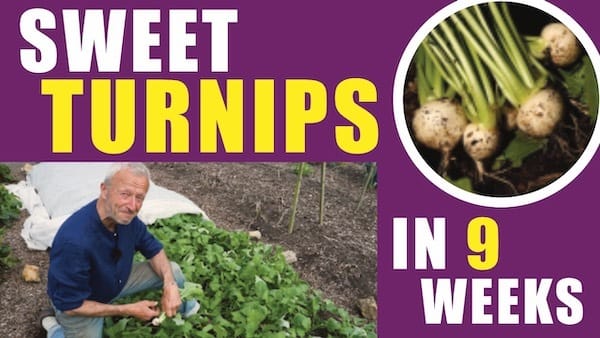
Globe artichokes is already published, grown from seed last February, and they cropped in July, even a second time in early autumn. How to Grow Turnips (linked to give you an advance view) I shall publish on Saturday. |
||
|
Then weekly, before their sowing dates, will be kohlrabi, spring onions, asparagus, Florence fennel, cauliflower, celeriac, leeks, sweetcorn, cucumbers ridge and greenhouse, runner beans for pods and seed, dwarf French beans. |
||
|
Do subscribe to my channel if not already, so that you receive notifications when these appear, plus other seasonal videos we make. |
||
How to Add Fertility |
||
|
||
|
My approach is based mainly on compost because that way I can make soil fertile enough for two or three plantings every year, while increasing fertility as well. In the three strip trial, where that mustard is growing, harvests in the 12th year were higher than ever, at 610 kg, compared to the previous highest of 458 kg. |
||
|
Others prefer to use green manures, although that means less food plants. I grow them when there are no other options for new vegetables, in the time available. |
||
|
A third way is to sow green manure plants under larger vegetables, such as broccoli, sweetcorn and Brussels sprouts, and I'm curious to try this with perhaps a dwarf clover. However, when not needed any more the clover would need mulching for probably two months, also it's invasive around the edges. We shall see! |
||
|
||
|
||
|
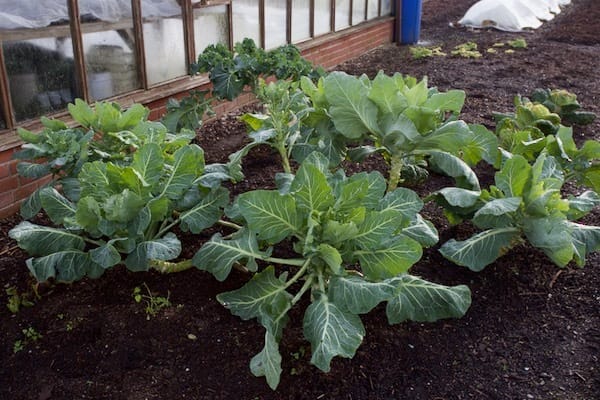
The broccoli plants above went in the ground on 17th July, after a massive and beautiful crop of celery in that bed. When harvesting the celery, I cut them just below ground level so that they do not re-grow, leaving the bed ready for new planting. It's a broccoli harvest for early spring, with small buds already. |
||
|
Summer plantings in particular are sensitive to timing, because just a few days in July represents so much growth potential gained or lost. If you don't have it already check out my Calendar of Sowing Dates, available in printed or digital format. |
||
|
See also my new Essential Knowledge Guide, packed with useful information and discounted until 3rd January. |
||
Winter salads under cover |
||
|
||
|
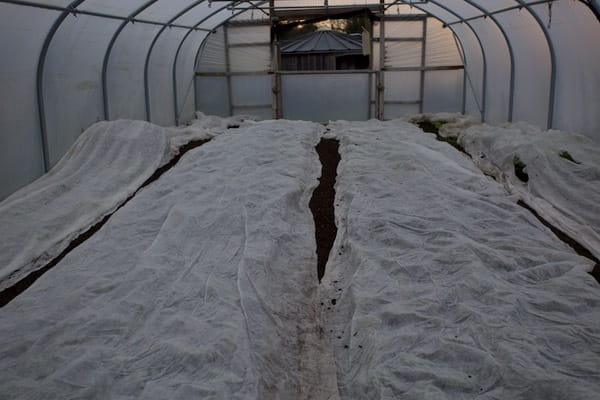
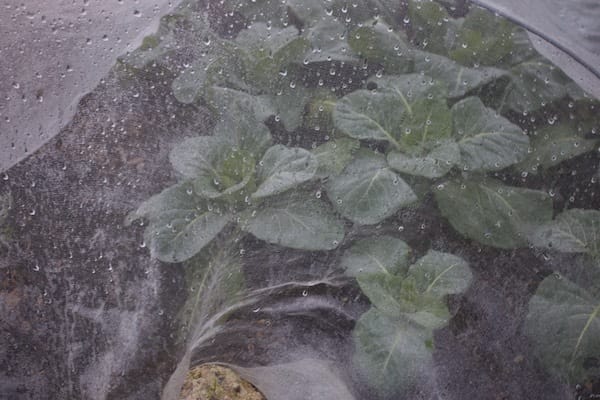
Timing is vital for these, sown mid-September to be large enough to survive winter, without being too advanced. That’s because they need youthful vigour for the main cropping period still to come, late February to April. See how we planted these salads in a video from October. |
||
Garden philosophy |
||
|
||
From Bruce Lipton Ph.D, The Biology of Belief Hayhouse 2008 |
||
|
1 How did we get here? |
||
|
2 Why are we here? |
||
|
3 How do we live in this environment? |
||
|
Outdated Understandings |
||
|
This first set of answers are still common, because they are from Newtonian physics, still the dominant paradigm. Such that we often don’t realise how it’s framing our lives. In gardening, medicine and most fields of human endeavour. |
||
|
1 Random genetic mutation |
||
|
2 No reason, just genetic accident. |
||
|
3 Survival of the fittest and control of nature. |
||
|
||
|
New understandings Now thanks to quantum physics, we have different and empowering answers. |
||
|
1 We are here as a result of cooperative interaction between our genes and the environment (Epigenetics) |
||
|
2 We are in an interactive relationship with our surroundings, which is a Garden (in the broadest sense), not a Darwinian battleground. |
||
|
3 Our purpose is to help Garden organisms to find better harmony. Through understanding their life processes and encouraging those which grow health for us. In turn, this gives us a stable environment in which to live and grow, cooperatively. |
||
|
In the context of growing food, this leads to no dig, making and using compost, and finding new health through eating the food we harvest. |
||
|
Happy New Year!! |
New year, new ideas, new plans

Written by
Charles Dowding
Charles Dowding
Last Updated





Online Courses


No Dig Gardening - Online Course
£95.00
£95.00


3 comments
Inspiring New Year gardening plans! Check out Telkom University Jakarta for modern software innovations.
Thank you Charles for this refreshing, hopeful and reality based perspective.
Happy New Year!
Hooray for Quantum Biology!
Thanks for helping to push the real and ideas forward to the benefit of us all.
Be well.